Clinical philosophy
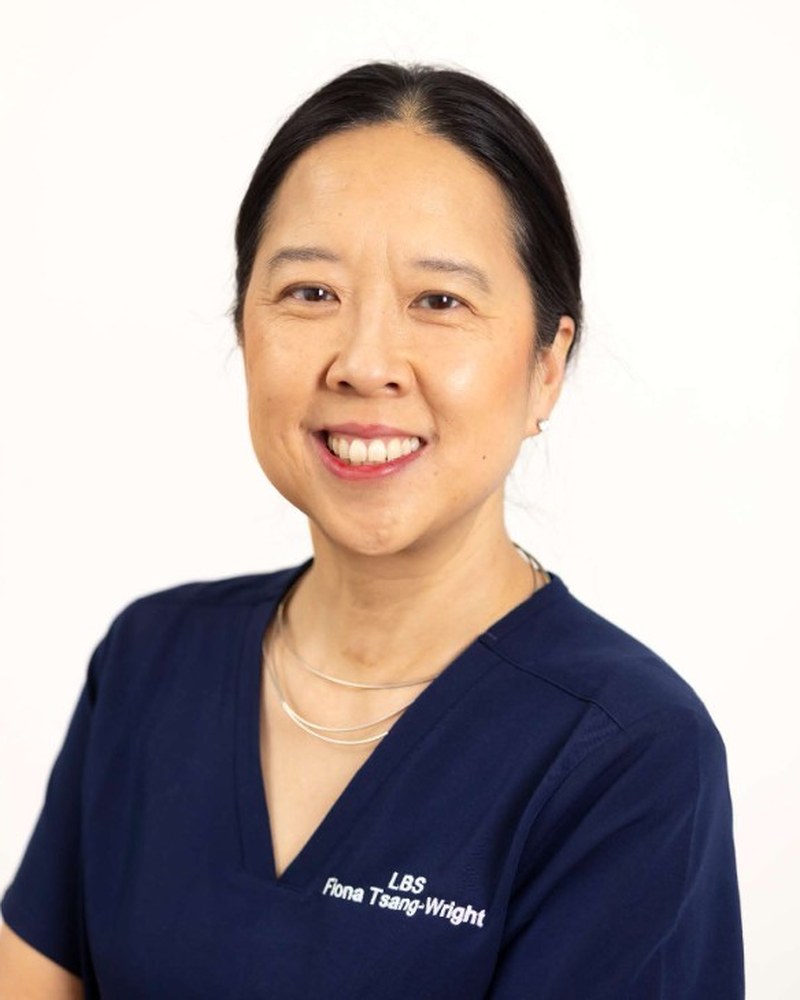
This page explains how decisions are made here, and why consultations run longer than a standard appointment. Dr Fiona Tsang-Wright is a Consultant Oncoplastic and Reconstructive Breast Surgeon, FRCS Gen Surg, GMC 4549831. She practises privately in London and Buckinghamshire at the Women's Health Centre – Harley Street, Women's Health Centre - King's Road, and The Chiltern Hospital. She holds an NHS consultant role at the Bucks Breast Unit, Buckinghamshire Healthcare NHS Trust. Her clinical approach rests on four principles: shared decision-making, oncological outcomes first, one-stop assessment where clinically possible, and multidisciplinary working for every complex case.
Will I have a say in my treatment?
Yes -- always. Shared decision-making is not a courtesy here; it is built into how appointments are structured. You will leave with an explanation you understand and a plan you have agreed to.
Does a private surgeon cut corners compared with the NHS?
Not here. Oncological outcome comes first. Cosmetic and reconstructive considerations matter, but never at the cost of adequacy of cancer removal. The same standard applies in both NHS and private practice.
Why does a consultation take longer here?
Because decisions take time. Appointments are allocated more time than a standard referral slot so that history, options, and questions can all be addressed in one visit -- rather than spread across multiple short follow-ups.
Principle one Shared decision-making
A diagnosis or a proposed operation is not a verdict to be accepted. It is the start of a conversation. Every consultation here is structured so that the clinical picture is explained clearly, the options -- including doing nothing -- are set out honestly, and you have time to ask questions before anything is agreed.
This matters most when the decision is genuinely difficult: when there is more than one reasonable surgical option, when the risk profile of an intervention sits close to its benefit, or when the right answer depends on what matters most to you. In those cases the surgeon's job is to give you the information to decide -- not to decide for you.
Principle two Oncological outcomes first
For patients with breast cancer, the priority is always adequacy of cancer removal. Cosmetic outcome and reconstruction quality matter -- they affect long-term quality of life and psychological recovery -- but they are optimised within the constraint of oncological safety, not instead of it.
Oncoplastic surgery exists specifically to reconcile these goals: to achieve clear surgical margins while preserving or restoring the shape and feel of the breast. But when those goals conflict, the oncological one wins. Patients are told this clearly before any operative plan is agreed.
Principle three One-stop assessment where clinically possible
Waiting for results across multiple appointments is one of the most stressful parts of a breast referral. Where it is clinically appropriate, imaging, clinical examination, and biopsy can be arranged on the same visit -- so that a diagnosis is available within days rather than weeks.
This is not always possible. Some lesions require interval imaging; some diagnoses need multidisciplinary review before a plan is confirmed. But the default is to compress the diagnostic pathway as much as the clinical situation allows.
Principle four Multidisciplinary working for every complex case
Breast cancer treatment at its best is a team decision. Complex cases are reviewed at the multidisciplinary team (MDT) meeting -- a regular forum where surgeons, oncologists, radiologists, pathologists, and specialist nurses discuss individual patient cases and agree on the recommended treatment plan.
Dr Tsang-Wright sits on multidisciplinary teams at Women's Health Centre – Harley Street, the Women's Health Centre at The Lister Hospital, The Chiltern Hospital, and the regional oncoplastic MDT. She maintains established working relationships with reconstructive plastic surgeons, clinical oncologists, and clinical geneticists. When specialist input is needed, referrals go through those relationships -- not to whichever colleague happens to be available.