There’s a fair question patients are increasingly asking when they book a private breast appointment in 2026: is AI being used in my care?
The honest answer at Breastory is yes, in two specific places. This page explains where those tools are used, what they do, and what they do not. It also covers your appointment, your data, and how to opt out if you’d rather they weren’t used. The aim is to give you a calibrated picture rather than either a marketing pitch or a defensive non-answer.
In this practice Where AI is used at Breastory
There are exactly two places.
1. AI-assisted reading on your mammogram (and ultrasound, and MRI)
When you have your imaging done — at HCA’s Harley Street facilities, The Lister Hospital in Chelsea, or The Chiltern Hospital in Great Missenden — the radiographer takes the scan. A consultant radiologist reviews it. Alongside the radiologist’s reading, the imaging centre uses AI-assisted reading software that scans the image and flags areas it considers worth a second look. The radiologist sees both the image and the AI’s flagged regions, then makes the final call.
This is not new technology. Image-pattern-matching software for mammograms has been used in some form since the early 2000s. The current generation of tools is meaningfully better at flagging subtle changes, and is now standard in modern UK private imaging.
The specific tools used vary by imaging centre.
See the glossary entry on AI-assisted radiology for the longer technical picture.
2. Heidi — an AI scribe at your consultation
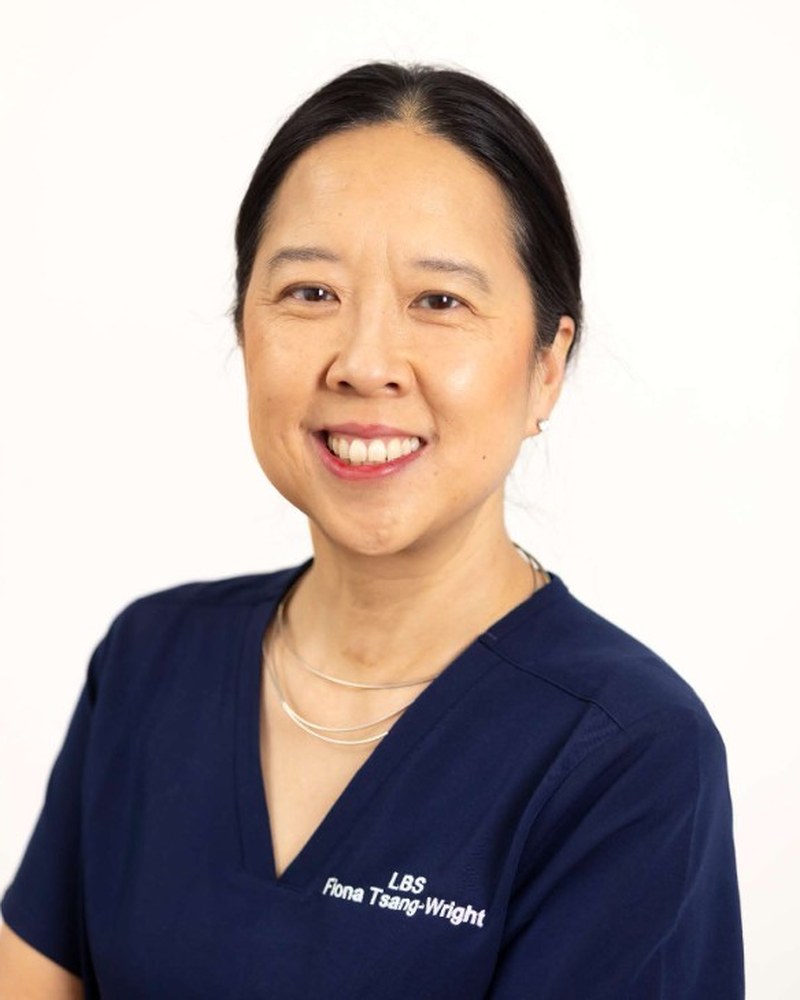
Dr Tsang-Wright uses Heidi, a clinical-grade AI scribe, during consultations. Heidi is a third-party tool (not built by Breastory). It listens to the consultation, transcribes what is said, and produces a structured clinic note that Fiona reviews and edits before it goes anywhere.
What you experience as a patient: more eye contact with Fiona during the appointment, less time watching her type. The conversation is the same one you’d have either way — what changes is who is doing the typing afterwards.
What’s important to understand:
- Fiona is still the one writing the note. Heidi produces a draft. Fiona reads it, corrects it, and signs it off. The note that lands in your record and goes to your GP is a clinician’s note, not a machine’s note.
- The audio is deleted once the note is signed off. Heidi processes the consultation audio and produces a draft note; once Dr Tsang-Wright has reviewed and signed off the clinic note, the original audio is deleted. Any longer vendor-side retention is limited to de-identified service monitoring, in line with NHS England ambient-scribing guidance (March 2026).
- You can opt out. Tell Fiona at the start of the appointment that you’d rather she took notes by hand. She’ll do that for the visit, no need to justify it.
See the glossary entry on medical AI scribes for the longer technical picture.
Your care What that means for your care
The practical effect of these two tools, in plain terms:
Your imaging gets a second pair of eyes that doesn’t get tired. Human radiologists are excellent — they have years of training and they catch most cancers. They are also human, working through hundreds of scans a day, and the evidence shows that an AI-assisted second look catches a small but real number of cancers that a single human reader might miss. The AI doesn’t replace the radiologist’s read; it sits alongside it.
Your consultation has more attention on you. A consultant who is typing while you talk is a consultant who is half-listening. Heidi takes the note-taking off Fiona’s hands during the conversation, so the conversation can be a conversation. The clinical record you get is no less detailed for it — Fiona reviews and corrects the note before it’s signed off.
The decisions about your care don’t change. Treatment plans are still made at the multidisciplinary team meeting, still drawn up by Fiona based on your imaging and pathology, still discussed with you before anything happens. AI tools support specific tasks; they don’t make decisions.
Your data What that means for your data
This is the part patients most want to know, and we’ve tried to be specific rather than legal-boilerplate.
AI-assisted radiology
The AI software lives at the imaging centre, not at Breastory. The flow is:
- Radiographer takes your scan.
- The image is processed by the imaging centre’s AI software, which flags areas for review.
- The consultant radiologist (employed by the imaging centre) reviews the image and the AI flags, then writes the radiology report.
- The radiology report comes to Breastory.
What that means: Breastory doesn’t receive the AI’s output directly. We get the radiologist’s report, which is a human document informed by both the radiologist’s read and the AI’s flagging. Your image is processed within the imaging centre’s data-handling perimeter, not Breastory’s.
The imaging centres’ AI tools are regulated medical devices (CE-marked or UKCA-marked under the UK Medical Devices Regulations 2002 (as amended), recognised on the GB market by the MHRA) and operate under the imaging centre’s own GDPR-compliant data-handling.
Heidi consultation scribe
Heidi is a tool Breastory uses directly. The flow is:
- Consent at the start of the appointment. Before recording starts, Dr Tsang-Wright explains that Heidi is an AI scribe, what audio is processed, where it goes, and that you can decline. You can read this page in advance; your choice is documented before the consultation continues.
- Audio processed during the appointment. Heidi listens via Fiona’s device microphone (a laptop or tablet in the consulting room).
- Transcript and structured note generated within the appointment or immediately after.
- Fiona reviews and edits the note, then signs it off. This usually happens at the end of the appointment or in the brief gap before the next patient.
- Audio is deleted once the note is signed off. After Dr Tsang-Wright reviews and signs the clinic note, the original audio is deleted; any longer vendor-side retention is limited to de-identified service monitoring per NHS England ambient-scribing guidance (March 2026).
- The structured note lives in your clinical record at the practice, with the same access controls as any other clinical note (Fiona, Sarah for administrative purposes, your GP if a copy is sent).
What you can ask:
- “Don’t use Heidi for this appointment.” Fine. Fiona writes a hand-written note instead.
- “Delete the recording / transcript from my last appointment.” We can request deletion from Heidi; the structured clinical note becomes the only record. The clinical note itself is part of your medical record and is retained per UK medical-records guidance (currently 8 years from last contact for adult records).
- “Send me a copy of what Heidi captured about my appointment.” You have the right under UK GDPR to request a copy of personal data held about you. Email Sarah at [email protected] to make a Subject Access Request.
Limits What we don't use AI for
This list matters more than the list of what we do use it for. None of the following happens at Breastory:
- No autonomous diagnosis. No AI tool sees your imaging or pathology and produces a diagnosis without a human clinician reading the same material. The radiologist reads every scan; Fiona reads every consultation. AI tools sit alongside, not instead of.
- No autonomous treatment recommendations. Treatment plans are written by Fiona, discussed at the multidisciplinary team meeting, and explained to you in consultation. No AI tool generates a treatment plan for you.
- No AI triage of new enquiries. When you contact Sarah to enquire about an appointment, that enquiry is read by a human (Sarah, or Fiona if Sarah escalates). No AI sorts urgent from non-urgent enquiries on the practice’s behalf.
- No image-only AI diagnosis. Even with the AI-assisted radiology layer, no diagnosis is made from imaging alone. The diagnostic standard for any new finding is triple assessment — examination, imaging, and (where indicated) biopsy — and the diagnosis is confirmed on histology, not imaging.
- No AI second opinions. When patients come to us for a second opinion, the second opinion is Fiona’s, formed by reading the histology, the imaging, and the original treatment plan herself. There is no AI tool that generates “a second opinion” on the side.
- No AI-generated content masquerading as Fiona’s own. Every patient-facing page on this website is reviewed and signed off by Dr Tsang-Wright before it goes live. The voice is hers.
Principles The principles we follow
Five principles, in plain language:
- AI augments, never decides. Every clinical decision is made by a clinician — Fiona, the radiologist, the multidisciplinary team — accountable to you and to the General Medical Council.
- Specificity over abstraction. When we use AI, we name the tool, describe what it does, and explain what it doesn’t. We don’t talk about “AI in healthcare” in vague marketing language.
- Data handling is part of the answer, not a footnote. Where audio or imaging is processed by an AI tool, the data flow, the retention period, and your opt-out options are part of how we describe the tool — not buried in a privacy notice.
- No outcome claims we can’t back up. We don’t say AI improves cancer detection rates by a specific percentage in your care, because we don’t have the practice-specific evidence to back that up. Where we mention published evidence, we attribute it.
- Your agency is preserved. You can ask not to have any AI tool used in any part of your care. Heidi is straightforwardly opt-out at the start of any consultation. Imaging-centre AI is harder to opt out of (it’s part of the imaging centre’s workflow, not the practice’s), but we can advise on the practical options at each location — speak to Sarah if it matters to you.
Questions Common questions
Will an AI decide what surgery I need?
No. Treatment decisions are made by Fiona, in conversation with you and following the multidisciplinary team meeting. AI tools support specific tasks like flagging areas on imaging or drafting consultation notes; they don’t make decisions.
Does Heidi listen to my whole consultation?
Yes. The audio is processed to generate the consultation note. The audio is deleted once the signed-off clinic note is saved; only the clinician-verified note is retained in your record. The note Fiona signs off lives in your clinical record.
Can I ask not to have my consultation recorded?
Yes. Tell Fiona at the start of the appointment and she’ll take notes by hand for that visit. There’s no need to justify it.
Does the AI on my mammogram get the diagnosis right more often than a radiologist?
The published evidence is mixed. Some studies (notably with current-generation tools like Lunit INSIGHT, Kheiron MIA, and iCAD ProFound) show modest improvements in cancer detection rate when AI is used as a second-reader layer. Others show no significant difference. The current consensus in UK private imaging is that AI is a useful adjunct, not a replacement, and the human radiologist’s read is still the primary read.
What if the AI flags something the radiologist misses?
That’s exactly the point of the second-look layer. The radiologist reviews any AI-flagged area before signing off the report.
What happens if I don’t want any AI in my care?
Talk to us. Heidi is straightforwardly opt-out at the start of any consultation. Imaging-centre AI is harder to opt out of (it’s part of the imaging centre’s workflow, not Breastory’s), but Sarah can advise on the practical options at each clinic location.
Is Heidi the only AI tool used at consultations?
Yes, currently.
Are AI-augmented risk calculators used?
Risk calculators like Tyrer-Cuzick, BOADICEA, and Manchester score are mathematical / statistical models, not AI in the modern machine-learning sense. They are used as part of risk assessment and have been for many years. We mention them under breast cancer risk assessment without an “AI” label because that label would be misleading.
Commitment What this page commits to
We will keep this page current. If we add a new AI tool to the practice — for example, an AI-augmented risk calculator, or an EHR-integrated drafting tool — we will list it here, describe what it does, and give you the opt-out options before you next have an appointment. If we remove a tool (for example, if we change imaging providers and the new one uses a different AI vendor), we will update the page.
If anything on this page reads as out of date, please tell us.